








Stove installation and fitting UK
With a stove, typically around three quarters of the heat generated goes into the room, with an open fire it's more likely to be the other way around with three quarters of the heat going up the chimney. This means that the smoke from a stove is great deal cooler than from a fireplace. The result of this is that a stove takes a long time to bring a masonry chimney up to operating temperature. This can mean that the stove will not draw properly, at least before it has been going for a good while, and the cooling smoke will condense, causing excess soot and, more dangerously, tar deposits. Tar deposits are not removed by a sweeps brush and cause chimney fires and you may get black tarry condensate leaking out through the bottom and sometimes even through the mortar joints of the chimney.
For this reason it is good practise to line and insulate a chimney whenever you fit a stove - see Lining a Chimney
We can liaise with your builder and supply all the materials he will need to complete the chimney lining job, or we can recommend a local stove installer.
Fitting the stove to an existing fireplace
Building regulations require that the stove should be on a plinth of non-combustible material extending at least 150mm at the sides and 300mm in front.
To fit the stove into a fireplace you will need:
A register plate. - This is the plate used to seal off the throat of the fireplace and has the hole for the flue pipe, a sweeping access and, if required, a bracket to support the flue pipe - see Register Plates
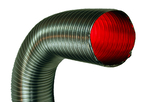
The flue pipe needed to go from the stove to the register plate
Both the register plate (which we make from steel to fit your chimney), the necessary flue, and the fixings and fire cement can be supplied with the stove. This means that with one delivery from Stoves Online, you have everything needed to install the stove, plus the back-up by phone or email to ensure a simple, pain free installation.
Fitting a freestanding stove
By using twin wall insulated flue, a stove can be installed practically anywhere, and no existing chimney is needed.
You can use our free flue design service and we'll design your whole system for you. You will know that it's done right and that it's safe. You'll also know what the material costs will be.