





Stove flue pipe length
In Document J, page 32 (2.14)
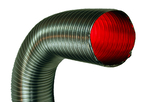
Single skin flue pipe is the metal pipe which connects your stove to your chimney. There is currently no maximum or minimum length specified in the building regs. They do say that single skin flue pipe mustn't pass through any roof space, floor or internal wall.
Maximum recommended length of single skin flue pipe
At Stovesonline we recommend that the longest length of single skin flue pipe you should have is 1500mm. Why?
A lot of heat will transfer to the room from the uninsulated flue pipe. Now you might think that is a good thing; "What's not to like, I will get more heat to the room?"
But it is the heat in the chimney which helps to power its draw, or how well it sucks on the stove. Your chimney is the engine for your stove.
A long length of single skin flue pipe leaves the flue gases much colder so the chimney won't draw as well and as well as that more soot, tar, and other deposits will condense in the chimney. This increases the risk of chimney fire
Modern EcoDesign Ready stoves are very efficient and so the flue gases are relatively cool already. Undoubtedly your chimney will work better if it is entirely insulated so as to keep the flue gases as warm as possible - this will promote a better draw from the chimney as well as reducing deposits.
Safety is of course a big concern - single skin flue pipe can get very hot. Running it near or through things which could burn is a really bad idea (and thankfully this is dealt with in the regs).
An initial length of flue pipe connected to your stove can not only look great but it can also help in other ways. If you make it an adjustable length it makes it easier to disconnect the stove if you have to. Also if you are using a lower grade liner or twin wall chimney then this initial length will take the brunt of the heat from the stove. We however do not have this concerns about connecting our liner and twin wall directly to the stove.
I can't recall any of our chimney liner or twin wall flue failing over the years due to this sort of heat damage, so you can rest assured when you work with us, whether you are in the trade or a home owner seeking clarity and safety for your stove installation.