
How to light your wood burning stove upside-down

Fast and fun, lighting your stove upside-down also makes less smoke.
Every stove owner needs to do their best to reduce the particulate emissions that their stove makes. That’s partly to do with how well your stove and chimney work, how dry your wood is, and also how you light and refuel it.
The upside down fire-lighting method is so good because it lets the kindling build up heat fast, with the larger logs only starting to catch fire once the kindling has warmed the firebox and chimney.
If you put the bigger logs on top of the kindling (using the more traditional fire-lighting technique) then they rob most of that initial heat from the fire, and so it takes much longer for the firebox to get up to temperature.
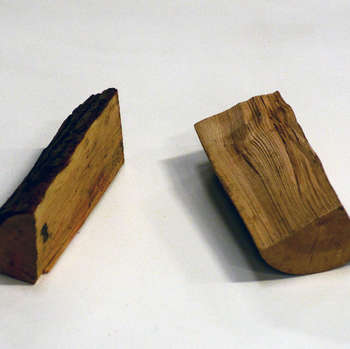
Start with a couple of bigger logs as a base, and make sure there’s room between them for the kindling stack you are about to make on top of them. You needn’t totally clear the ash from the stove every day, a bed of ash forms a nice insulating layer to build the fire on. You can always poke a few holes through to the grate (if you have one) so that the fire gets some initial air from underneath to get it going well.
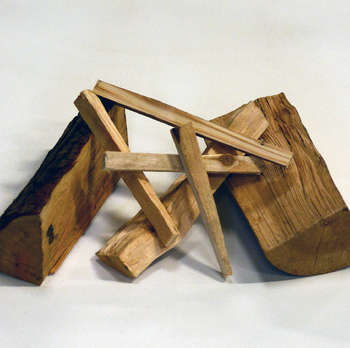
Now use a medium sized bit of wood next and then lay the kindling on top. Lay the kindling a bit like ‘pick up sticks‘ so that they’re touching, but with good air gaps between them. Softwood makes great kindling, as do some of the lighter hardwoods like ash.
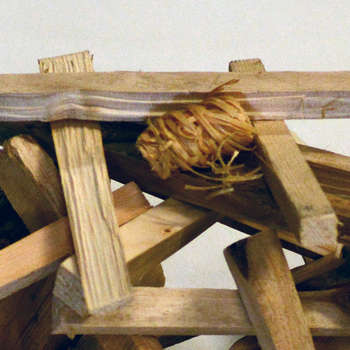
Put your eco firelighter near the top I suggest firelighters made from wood shavings as they’re sustainable and a real pleasure to hold and use.
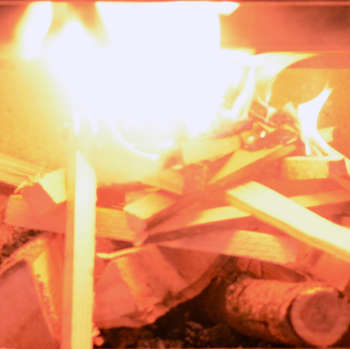
Open both air controls on your stove fully, and if you have a flue damper open that fully too. Light the firelighter and close the door.
A few minutes later and the kindling should be burning well. You’ll see that those air gaps that you left between the kindling let the flames wash over the pieces of wood easily, helping the fire to spread. The other advantage of the upside-down technique is that it quickly heats the chimney up, which makes it draw better, which in turn will make your stove burn better.
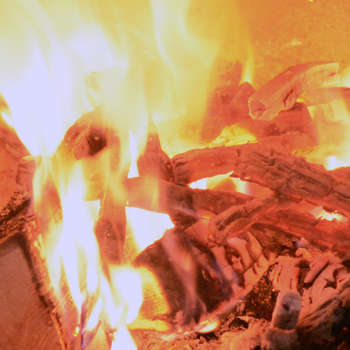
Eventually the bigger logs will be starting to catch fire and the kindling will now be showing red glowing embers as the fire properly develops. Once the bigger logs are burning well you can probably start to adjust the burn rate down a bit. Start by using the primary air control (the one supplying air to the bottom of the fire), then the secondary if needed/possible. Always aim to have good clear flames in the firebox. If you see wisps of dark smoke then you have probably closed the air down too much. Keep an eye on the fire and adjust the air supply as needed to keep the fire burning well. Developing an “eye” for how well the fire is burning is a thing which also just takes some time to learn and get used to. Pop outside and look at your chimney you should only see heat haze coming from it with no visible smoke.
Eventually the larger logs will have burnt down to embers and now is the time to refuel. Open up the air controls again so that the new logs catch fire quickly. Open the door of the stove slowly to let the chimney adjust to the much higher flow rate add your logs and close the door. Once they have caught fire well then you can adjust the controls back down.
Some extra pointers
If you will only be burning wood then choose a dedicated woodburner if possible as it will probably be designed to be more efficient at burning wood, plus, if there is no grate, then the firebox will be that bit larger.
We supply AirSmart stove controllers these automated controllers constantly control the air supply to the stove paying far more attention that you or I possibly can (or want to!).
Things not to do:
- Do not use paraffin, ethanol, petrol or similar to help you light a stove.
- Do not leave the stove unattended whilst you are lighting it.
- Do not fill the stove right up with wood, then turn the air controls down to the heat output you need that will result in high particulate emissions. Add a suitable amount of wood for the heat you need so that the stove can still burn at a reasonable pace.
- Don’t fill the stove and “turn it down for the night” again that results in high particulate emissions.
Particulate emissions are, for me, the most important thing about wood burning stoves that we need to improve on. And that’s why we’ve adopted EcoDesign (which sets EU-wide particulate emission limits on stoves) a year ahead of schedule, and will be doing more to reduce the particulate emissions of the stoves we supply.
Using well seasoned dry wood is perhaps the single biggest thing you can do to reduce particulate emissions. To burn well wood needs to get hot and it won’t do that until the moisture in the wood evaporates. If you burn wet wood then all the heat from the fire is being used to evaporate the water, the firebox temperature takes much longer to climb, and the emissions are higher. Here’s a page with some ways to make sure your firewood is well seasoned.
You also need a well functioning chimney which serves as the “engine” that drives your stove. If your chimney is not drawing/sucking well, or is drawing too much then it will be hard to burn efficiently. We can help advise you as to how to fix chimney problems. Also if your stove is not in tip top condition then do not despair, we have a dedicated Stove Spares team
Assuming your stove and chimney are in good order, and that your wood is well seasoned, then reducing emissions is down to how you light and use your stove. Do it upside-down!